Resume builder for jobs in Thailand. In English, on A4, with room for your photo.
Pick a template, type your details or bring in your old resume, and see each change on the page as you make it. Your photo, degree and English test scores all have a place, and the finished resume downloads as an A4 PDF for employers in Thailand and abroad.
Free to build and preview, $9 once to download. No sign-up, and your details are saved in your browser, not on our servers.
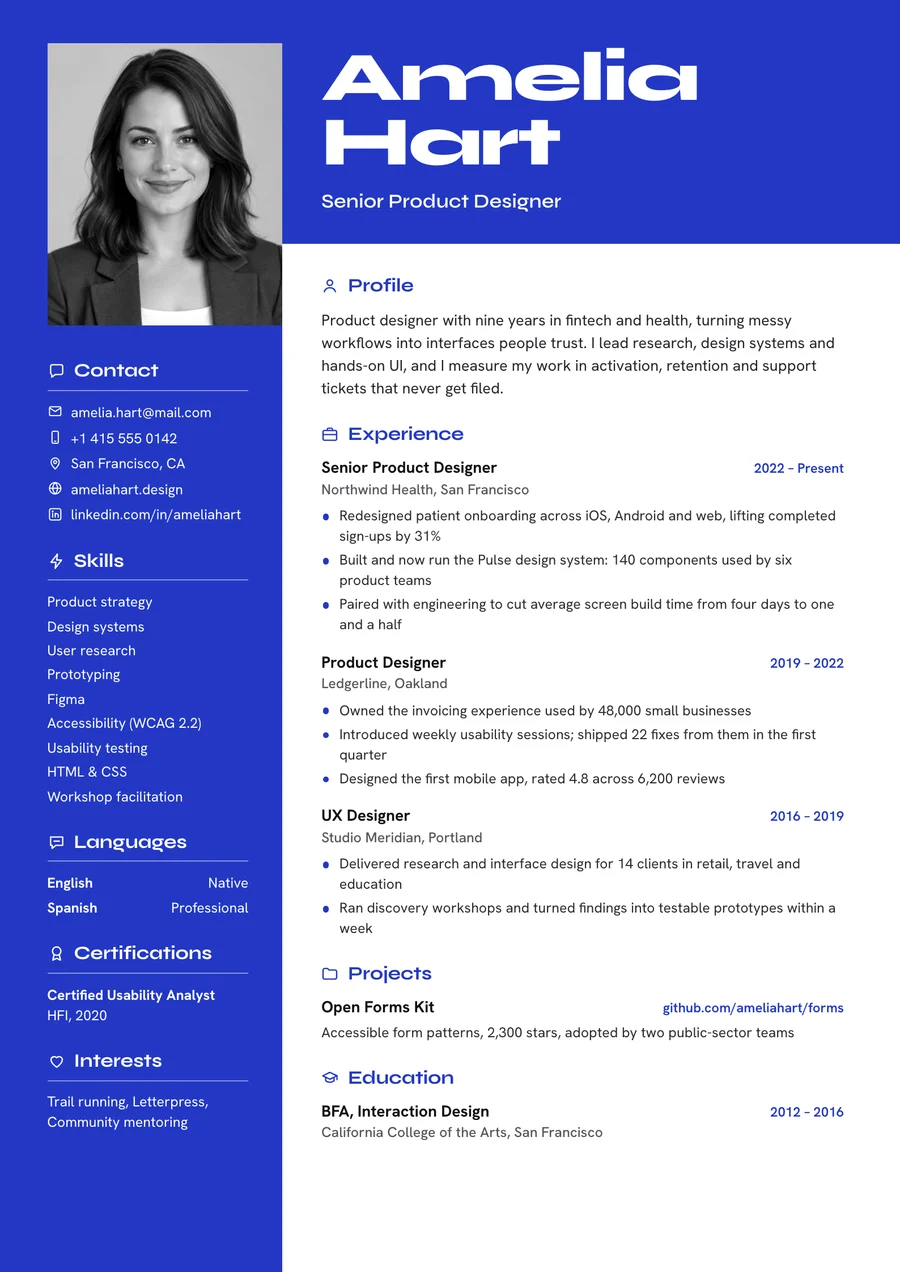
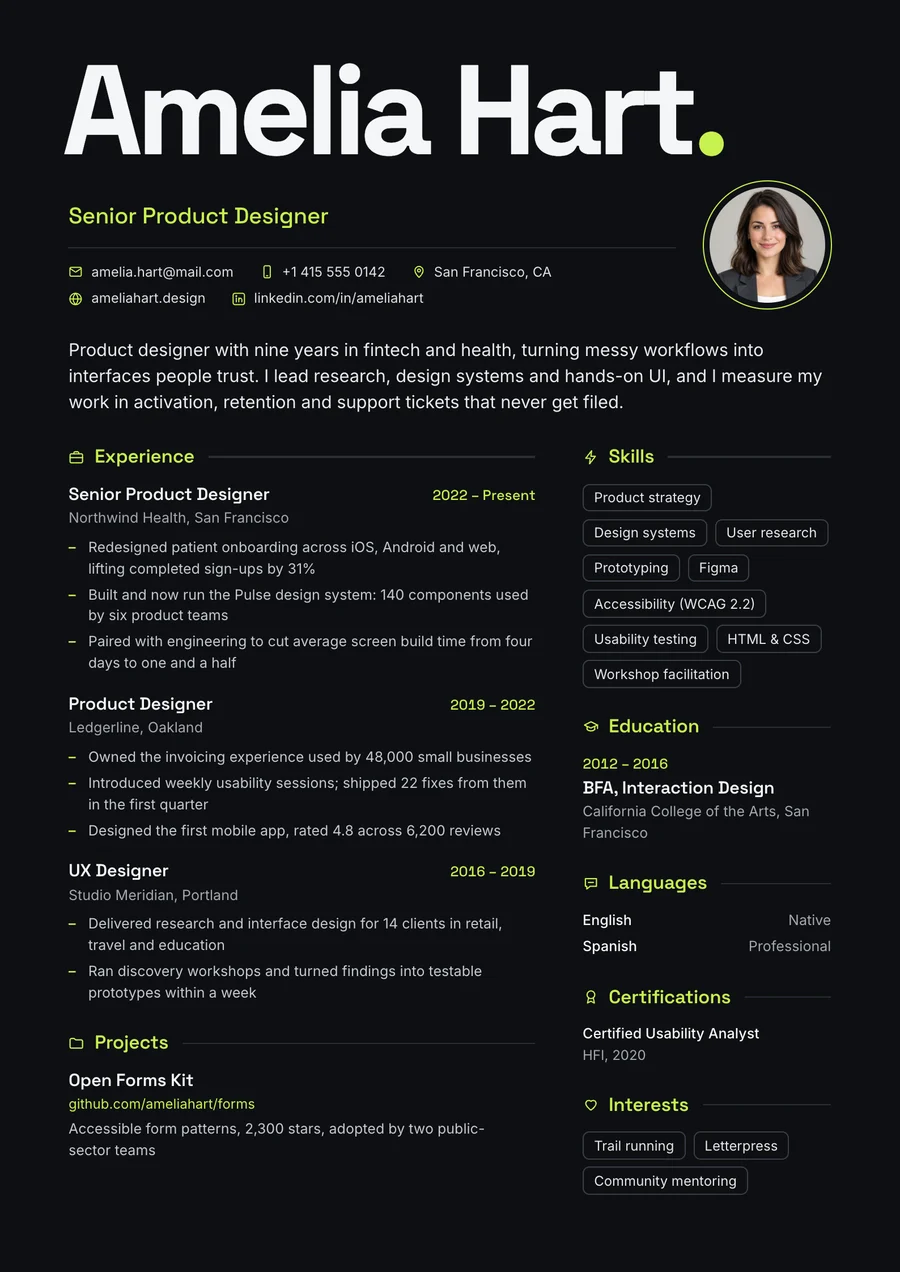
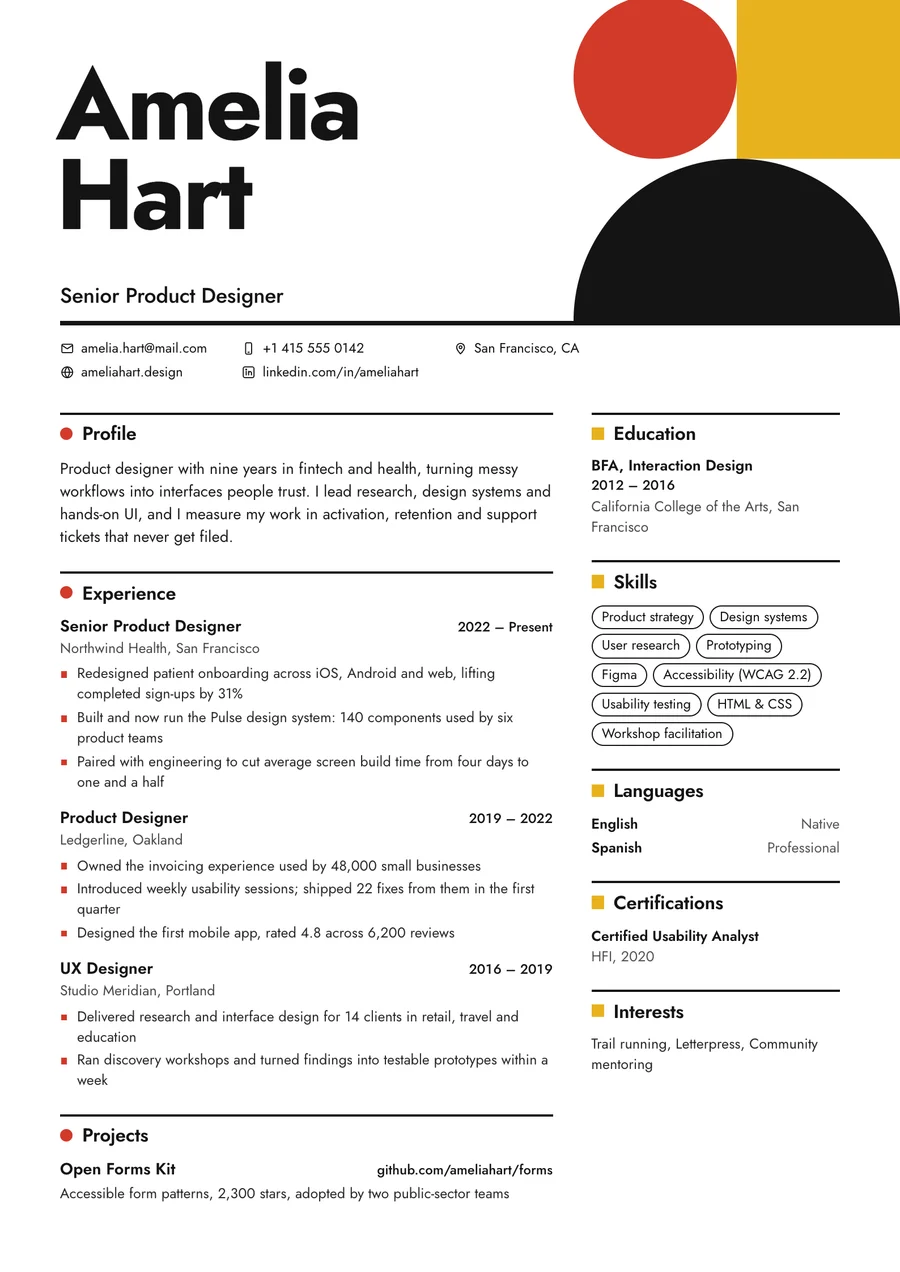
Built for English resumes in Thailand
A photo where Thai recruiters look for it
Many templates have a photo spot at the top of the page. Add a recent, professional headshot, or leave it out for employers and countries that do not expect one.
Import the resume you already have
Drop in a PDF or Word copy of your current resume and CVFalcon reads it into the form for you to review. You fix and update instead of typing every job again.
Readable by job boards, ready for abroad
Templates keep your words as real, selectable text, not pictures of text, so job boards and applicant tracking systems can parse them. Pages are A4 by default, and US Letter is one switch away for the US and Canada.
Resume templates for jobs in Thailand
See all 28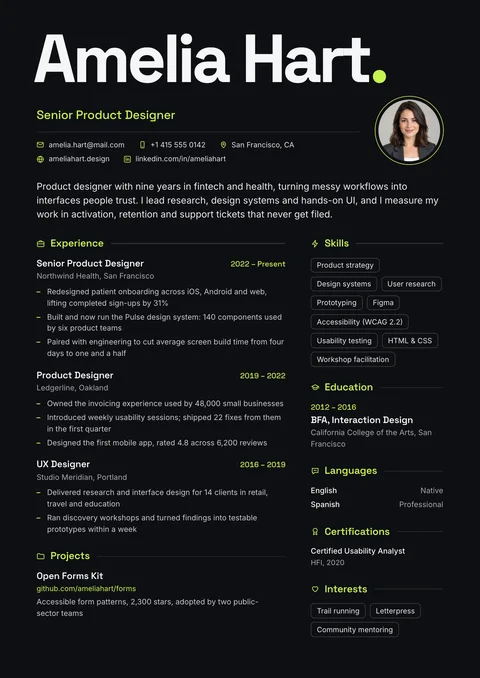
Tech, design, startups
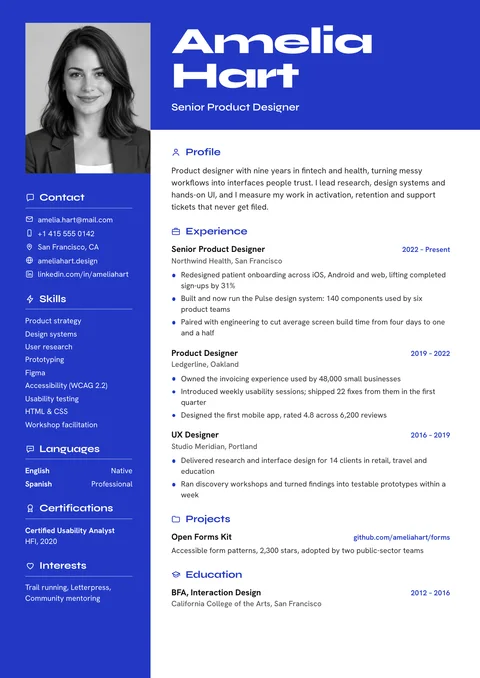
Creative, media, sales, personal brands
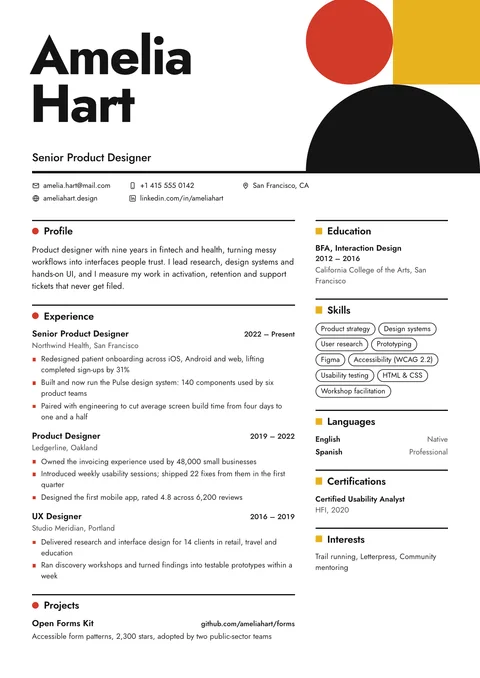
Design, architecture, creative agencies
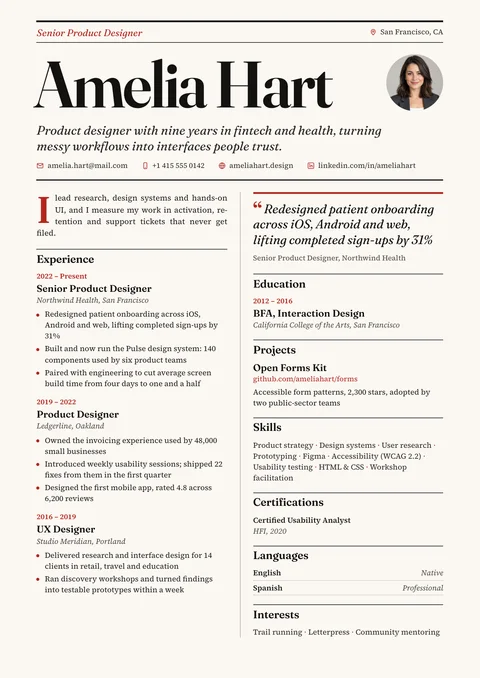
Writers, communications, design leads
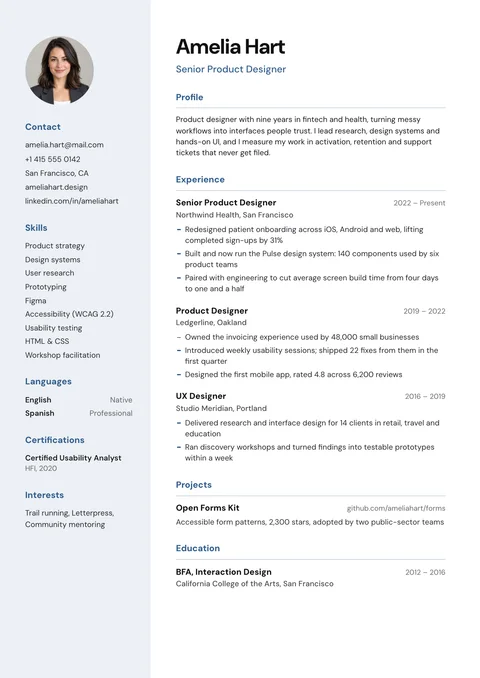
Product, marketing, operations
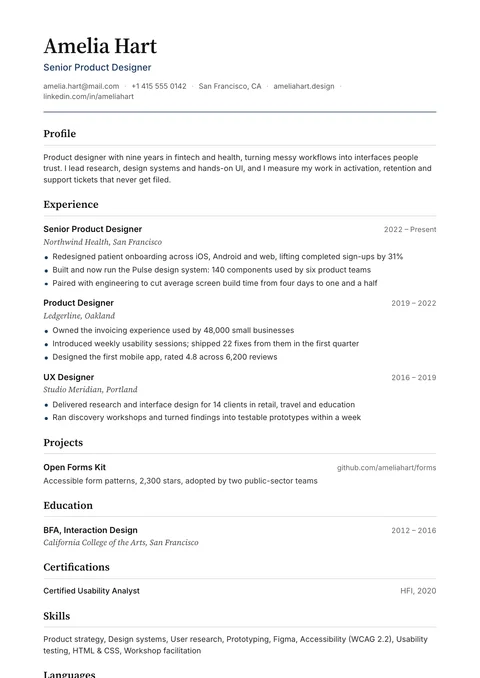
Any industry, applicant tracking systems
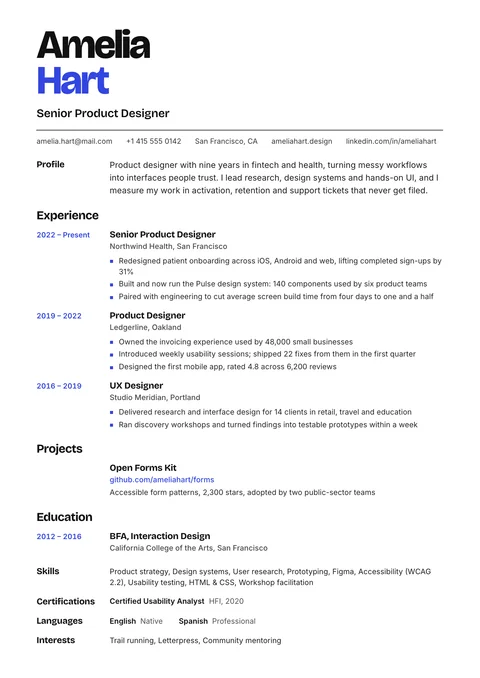
Startups, marketing, product
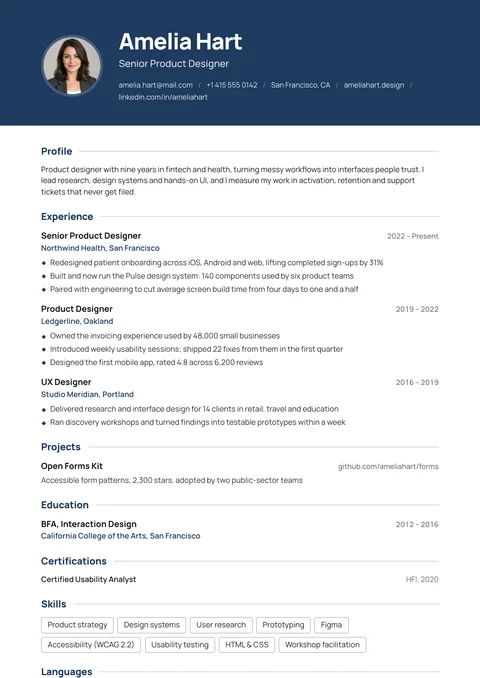
Sales, management, client-facing roles
What employers in Thailand expect on a resume
Most Thai resumes carry a photo
A photo is the norm on Thai resumes, and some job ads ask for one, especially for customer-facing roles in sales, service and front-desk work. Use a recent headshot in clothes that suit the role, against a plain, light background, on the first page. For banks and schools, formal dress is the safe choice.
English or Thai: follow the job ad
Apply in English to international companies, multinationals and any job ad written in English, where your resume doubles as a first sample of your English. Many Thai companies and government agencies work in Thai, so check the ad and send a Thai resume when it asks for one.
Keep personal details short
Older Thai formats list age, date of birth, marital status, height, weight, religion and, for men, military status. Thai job boards now advise leaving out religion, height and weight and keeping only what the job needs; the employer's application form usually asks for the rest.
Your legal name and a professional email
Put your full first name and surname at the top, spelled as in your passport, and save your nickname for the interview. Use an email address made from your name, not a student address, your current work email or an old nickname account.
Write years in the Western calendar
Thai documents usually give years in the Buddhist Era, but an English resume should use Western years. Subtract 543 from the Buddhist year, so a degree finished in 2566 becomes 2023, and use the same date format throughout.
Add your TOEIC or IELTS score
Many state enterprises, some government agencies and some private companies set a minimum TOEIC score, and airline, hotel and tourism employers value English test results. List your latest score and the year you took it under Certifications; employers usually want results no more than two years old.
Resume examples. Written for your job.
All examples- Product designer
- Marketing manager
- Software engineer
- Sales account executive
- Financial analyst
- Registered nurse
- Teacher
- Student and recent graduate
- Project manager
- Data analyst
- HR and recruiter
- Operations manager
- Accountant
- Civil engineer
- Administrative assistant
- Customer service agent
- Receptionist
- Mechanical engineer
- Graphic designer
- Procurement officer
Resume guides. Read before you apply.
All guides- Should you put a photo on your CV? A country-by-country guideWhether to add a photo depends on where you apply. A country-by-country answer, and how to take a headshot that helps rather than hurts.
- How to write a CV with no experience: students and fresh graduatesNo full-time job yet? What to put on your first CV, how to write it so it reads like evidence, and the mistakes that make graduate CVs look thin.
- CV vs resume: what is the difference, country by countryThe two words mean different things in different countries. What employers in the US, Canada, the UK, the Gulf, India, Australia and beyond expect when they ask for one.
Build free. Pay $9 once to download.
Writing, editing and previewing cost nothing, and there is no account to create. The PDF download comes with the CVFalcon Pass: one payment of $9, charged in US dollars. The Pass gives you unlimited downloads of every template, for good, with no subscription.
Build and preview
- Every template, every colour
- Live preview as you type
- Import your old resume from PDF or Word
- No sign-up, saved on your device
CVFalcon Pass
- Download your resume as a clean PDF
- All 28 templates, A4 and US Letter
- Unlimited downloads and edits, for good
- No subscription, ever
One payment. Preview free before you pay.
Thailand resume questions
Resume or CV in Thailand?
Thai employers use the two words for the same document, and resume is the more common one. Keep it to one or two pages; a longer CV is mainly for academic and research posts.
Should I put a photo on my resume?
Usually yes. A photo is the norm in Thailand, and some job ads ask for one. Use a recent headshot on a plain, light background. Leave it off for employers in the US, Canada and the UK. The photo in CVFalcon is optional and downloads are unlimited, so you can save one copy with it and one without.
Should my resume be in English or Thai?
It depends on the employer. Use English for international companies, multinationals, jobs abroad and any ad written in English. Many Thai companies and government agencies work in Thai, and some ads say which language they want. CVFalcon does not offer Thai section headings, so use it for your English version.
How many pages should my resume be?
One or two A4 pages. Fresh graduates should aim for one, led by education, internships and university activities. Experienced candidates rarely need more than two: give recent jobs the most detail and shorten early ones.
Should I put my expected salary on my resume?
Usually not. Thai employers tend to ask for it on their application form or at the interview. If a job ad asks you to state it, give a range and add 'negotiable'.
Can I use the same resume for jobs abroad?
Yes, with a few changes. Keep it in English and follow each country's habits: add your nationality in the optional field for Gulf employers, and leave off the photo and nationality for the US, Canada and the UK. Choose US Letter as the paper size for the US and Canada.
How much does CVFalcon cost?
Nothing while you write: every template, the live preview and resume import are free, with no sign-up. The PDF download needs the CVFalcon Pass, a single $9 payment in US dollars that covers unlimited downloads, with no subscription.